Thursday, March 7, 2019

The Missing Ingredient


A well-respected family friend shared on her Facebook timeline an article in the Himalayan Times that posits how culture is the missing ingredient in healing cities after disasters. It cites, as an example, how the deadly earthquake in 2015 in Nepal became a sort of unifying force that brought people together to work towards rebuilding what was near and dear. Because what had been damaged were of value not only as structures but as cultural heritage, as marks of identity and as things that were alive.

As a resident of Kathmandu, I can fully attest to this. The city's temples and public squares are true communal social spaces as much as they are places of worship and subjects of awe for wide-eyed foreigners. They don't preserve a temple for the sake of preservation just because it's thousands of years old; they actually use their temples. That's how their sacred edifices remain alive to this day and that's why they rose up fast after they crumbled in the earthquake four years ago. If someone wants to touch an idol, people won't object just because it's over 2,500 years old. If someone wants to wash clothes in the water temple, they're free to do so. If a young couple wants to have an intimate time on the covered steps of the temple of Shiva and Parvati, away from parental scrutiny, the priests might even give their blessing.

A common problem I've noticed in a lot of European, South American, Middle-Eastern and (of course) Filipino "sacred" and "heritage" places is that they like to put what they consider holy inside glass boxes, accessible only to a privileged few. This way, the culture that might once have been built around an icon dies a slow death because people feel removed from it. And it isn't their fault. If it were me, I wouldn't repeatedly impose on myself to be in a place where I couldn't fully express my reverence because I'm not clean enough to touch something.

In Nepal, the story is different. A temple is a place for community even if religion is not strictly organised here as it is in a place like the Philippines. Take the Monkey Temple (Swayambhunath) as an example. Listed as a UNESCO World Heritage Site, it is a Tibetan Buddhist temple where monks and practising lay adherents to the faith revolve around a large stupa in meditation. However, it isn't limited to that. Religious Hindus also go there to maintain the structures, sell food and souvenirs, and feed monkeys. Couples go on dates there. Fitness enthusiasts climb its 400+ steep steps in the morning (just like my 80-year-old grandmother did when she came to visit). Astronomy/astrology fans go up there to stargaze on clear sky mid-nights. That's why when part of it was downed during the 2015 earthquake and there was a looming threat that UNESCO, who offered to fix it, would pry it open, the ordinary people of Kathmandu gave a big firm 'no' and decided to pool resources to fix it themselves. It was among the first places of worship in Nepal to recover after falling because the community came together. Because it's something part of them. Because it's an extension of what they know to be home, even if it does not directly represent the faith that they subscribe to.

Monday, December 10, 2018

The Ambiguous but Genuine Spirituality of Liza Migriño Quirog

"...an overturned black car resting on a vaguely familiar grassland."


Saturday mornings are usually extremely lazy days for me. I sleep in and have a late brunch if nobody cares to yank me out of bed. When I do wake up, the routine begins with a runthrough of all the messages and emails I received while I was away in dreamland. December 1, 2018 was to be no different, I thought, but I was direly mistaken. At three minutes before noon (Nepal Standard Time), I awoke to successive vibrations from my smartphone and was jolted out of bed by my own barrage of expletives over the messages and photos I received from my mother -- news of the accident she had met earlier that day, accompanied by five (5) shots of an overturned black car resting on a vaguely familiar grassland.

In one of her messages, mama mentioned that she and everyone with her were ‘still alive,’ which, to a child living abroad and away from his mother, would be the most alarming reason for a phone call. ‘Still alive’ just didn’t cut it for me; I had to know she was completely fine and it didn’t help that my room’s weak WiFi signal prevented me from making a successful call on my first attempt. I’ve always seen something like this coming. With the kind of schedule she has and the speeds at which her service vehicles are compelled to run so she can make it to her appointments on time, I knew this was bound to happen at some point and I have always dreaded it.

I breathed a great sigh of relief when she picked up sounding absolutely calm. No hint of pain whatsoever. She proceeded to tell me that she and the three other people in the car with her escaped with not a single scratch. She was already home after a work meeting which she attended following a physical examination by TaRSIER 117’s first responders. I was baffled by the idea that she could nonchalantly just get back to work a few hours after an experience like that. I would need two dramatic days to recuperate if it happened to me. But then an inner reminder said something along the line of ‘This is your mother. She will always be alright.’ Then I understood. Then I accepted and let go of doubt.

A couple of days later when I felt that any remaining undetected twisted nerves would have rested back in place, I asked mama what went through her mind while the car turned over with her inside it. I was half expecting an answer detailing the life-saving procedures she may have learned from military combat training, but instead got a very clear expression of faith. “It was like I was not myself at all. It felt like I was there just to go through it because it was happening to me. It was like a total giving up of myself to something that I didn’t have the time to reason what or who,” she said. “One doesn’t reason at all. One just goes through it with complete trust of what may become. There was nothing except total submission to a being that I didn’t think what or who. It’s never human or materially comprehensible. It’s Divine -- a super being beyond what I am capable of intellectually comprehending. I just gave myself up with complete trust. I didn’t think of being saved. I just trusted and nothing else.”

Her words conjured images from a film I saw several weeks ago called ‘Mister Lonely,’ which involves a scene where a nun who accidentally fell from an aircraft in flight professes complete trust in God and hits the ground alive and unscathed. To many, these words from my mother may be quite confounding. Very few people know Liza Quirog deeply as she is a very private person who is picky when it comes to the subject of faith and Spirit. But I know my mother and these words did not surprise me at all. You see, one of her most ubiquitous pieces of advice, always prominently featured when she makes an ‘aunty’ speech at a debut party of one cousin or another, is to pray. She does not name drop any deity, she just emphasises prayer as an effective daily tool in life. This, dear friends, I must say, is not lip service to please religious majority crowds or for lack of anything else to say. I know mama and she is a very prayerful person. Perhaps she does not hear mass regularly, spew out memorised Bible passages, recite the Rosary or even mutter the Lord’s Prayer, but in her own private space and time, she does pray.

I’ve always been wary of people who claim to be ‘spiritual but not religious,’ subtly turning my head ever so slightly to my right to secretly roll my eyeballs each time I hear it. It’s a very common phrase for disillusioned individuals and apostates who have left the organised religion they were raised in. It took a long time for me to realise that I was raised by one ‘spiritual but not religious’ woman who didn’t even make a verbal claim to the description. When I asked my mother how she called herself religion-wise, she said something to this effect: ‘Baptised Catholic, trying to practise the teachings of Christ and the Buddha while constantly seeking as a Theosophist.’ Even if she is not the typical church-going Filipino, she approaches all matters of Spirit with utmost reverence and it was perhaps not until this most recent brush with fate that she has proven to herself the strength of her own faith even if it does not come with a strict label.


as seen on the Bohol Tribune
09 December 2018

Thursday, January 18, 2018

A Literal Waking Nightmare

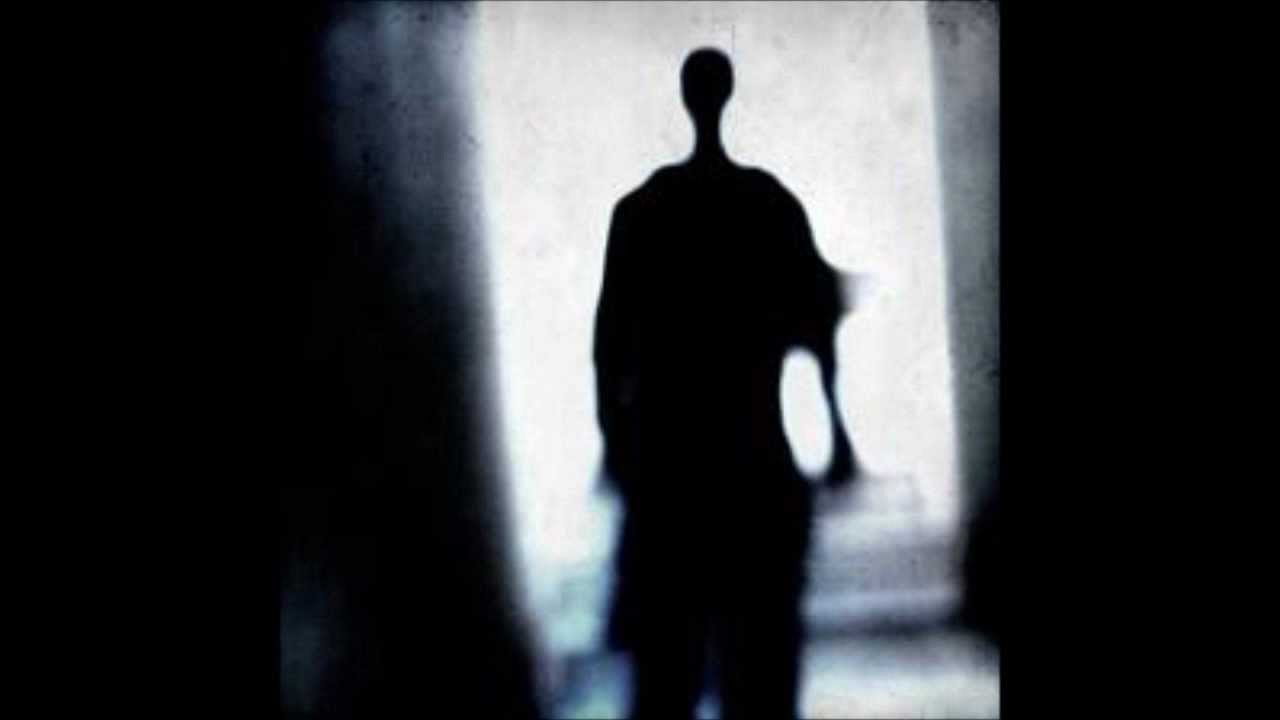
Photo borrowed from My Haunted Life Too:  Image Link


When you dream, you usually forget about it. You may recall it for a moment, but then it quickly fades. I, for one, have experienced recalling dreams just a few minutes into my waking state and then completely forgetting about them barely another minute afterwards. But not this one.

13 January 2018
The following narrative is deliberately written in the present tense. It's an account a dream, so duh!

I'm in a very dim room. A pair of distinctly rough hands grab my shoulders from behind. I turn to see who it is and notice a tall, skinny man with hairy arms. I look up, but the faint light only permits a view up to his chest. I see no face. It does not occur to me to try harder to see one. Instead, I turn away.

I regain consciousness and suddenly my surroundings change from the vague scene of a dream into my own room. I am awake, but the hand is still on my shoulder. I could feel it fully on my bare skin -- rough, warm and worn out, like a fisherman's or carpenter's.

My heartbeat begins to race. It's a horrible feeling. Normally, sleep paralysis accompanies something like this, but I am fully mobile. Now taking notice of the light piercing from the lamp post outside my window through the makeshift curtains made from a microfibre towel and a blanket I once took from an Etihad flight, I am fully conscious.

I move my shoulder and the hand is still there. I come to terms with the idea that there is another person in the room with me. I lay frozen, feeling almost helpless. Then I realise I could tell it to go, so I do just that. It obeys. I feel the skin on his palm part from mine as he lifts it off my shoulder. And now, silence. I hear no footsteps, no doorknob turning, no door hinges creaking -- nothing. It takes a minute before I turn my head to the blindside of the room, to what the subdued light piercing through my drapes shine on. And nothing, thank goodness. It was only a nightmare. Or was it, though?

Who was that ? Was it a malevolent being ? Was it benevolent? Was it neutral? It did not harm me in any way. It just left me a little shaken. I was afraid, sure. But not all that we fear are bad, and not all that we trust are good.

Tuesday, September 5, 2017

A Fake Name, a Bean Stew and a Self-Inflicted Heartache

chili


I remember a romantic encounter over a year ago when I was in La Paz, Bolivia. He was an Argentinian artist who co-owned a bar and painted murals on commission. He had spent the past week juggling broken old mobile phones and walkie-talkies on the streets of Sopocachi and Calacoto, hoping for people to be amused enough to spare a few coins and notes so he wouldn't have to rely on his bank account for food while travelling. Prominent among the plethora of bracelets on his left wrist was a band with blue and white stripes, and a stoic-looking golden sun. The dialect of Castilian he spoke was like gentle rain on a dry wheat field.

We met at Plaza Murillo one cold Friday afternoon in the Southern Hemisphere summer of 2015-2016. It could easily have been 8°C, so I wore the new alpaca wool hoodie I'd bought the previous day. He spotted me petting a bystander's puppy and stopped to ask if I had any dogs myself. I was a little weirded out but I responded, anyway. I told him I had four back in the Philippines. He said he had one back in Buenos Aires before quipping about how I might not need such a warm sweater in my country. "Sho me shamo Miguel," he went on. "Y vos?"

My response would become one of my biggest regrets that year. It was the destruction of possibilities. It was the beginning of something that could never last more than a night. After honouring his accent with a friendly mock -- "Jefe, BOSS, por qué hablas como la shuvia?" -- and telling him he wasn't getting my sweater, I said my name was David because I liked the sound of it and I also didn't think I wanted to see him again after that day. He was handsome, sure, but I stereotyped him as an Argentinian. After all, they do have a global reputation for being cocky. And it didn't help that he was clearly fully European-blooded. I don't think one could get any blonder than him. Think of Draco Malfoy's hair, but up to the waist.

The puppy's owner had to leave, so we took over his bench and chatted a bit more before going for an aimless stroll all over the district. The chemistry was undeniable and the sexual tension was intense. We covered topics ranging from fire-juggling to Eastern Spirituality to progressive Christianity to Ayahuasca, while exchanging innuendos and stealing glances at each other. Before we knew it, the clock had passed 19:00 and the sun was about to set. He stopped walking just in front of a place called Casa del Sol and asked, "Cena?" I was hungry and all there was to do was walk in, so I said yes.

I was so pleasantly surprised that it was a vegetarian restaurant that I grinned from ear to ear, browsing through the menu like a little boy at Disneyland deciding which ride to go on first. I was 100% sure I didn't tell him about my eating habits so I asked him how he knew. He responded with something along the lines of "I wouldn't like you that much if you had struck me as the meat-eating type. And I like you that much." My heart melted. I regretted so much giving him a fake name.

I sat there, ate and chatted all while trying to figure out how I could possibly take my lie back. I went to a bar with him and had around four beers, pretending to have a conversation but really thinking "Will he still like me that much if he finds out I lied about something as basic as my goddamn name?" I went home with him to his Couchsurfing host's flat, stayed the night with my head spinning over how stupid I was to have lied to this incredibly beautiful human being beside me. When the sun returned for another day and we needed to part ways before his host woke up, he wrote his email and number on the back of a faded receipt. I dropped it in my day pack's main compartment and gave him one final kiss before disappearing, never to be seen by him again.

I'd like to romanticise this tale by saying I let the paper float away on a river somewhere, but that would be like saying my name was David -- another lie. I actually just lost it. I tried to dig for it in my day pack and my huge rucksack as I was leaving Bolivia, during my stay in Lima, in Amsterdam and Kuala Lumpur, and after I had landed in the Philippines. Nada. It's been over a year and I've given up already, but I will always remember that day. A day of could-haves. A day of what-ifs. A day that gave me a glimpse -- a taste, if you will -- of something beautiful but impossible.

So what does this story have to do with my bean stew in the photo? I ordered one off Casa del Sol's specials menu when Miguel and I were there, and I was absolutely bowled over by how delicious it tasted. It was just sensational! No bean stew has since surpassed its quality.

After I complimented the chef, I was blessed with a piece of culinary treasure when he told me the secret to great chilli is to grill the tomatoes whole until the skin burns and ruptures. Cut them in half, sprinkle a pinch of salt on the inside of each piece and let them sit for at least 15 minutes before throwing them in your pan to sauté in olive oil with onion and garlic. Absolutely lovely, but I can't help but think the chef spoke of more than a recipe that night. For during the days that followed, it was as if my heart had been ripped off my chest, grilled whole, cut in half, salted and thrown in the fire.


Friday, September 1, 2017

In other news...

Al Jazeera English


How does one weigh one injustice against another and how does one decide which one to talk loudly about or take action against? It's easy for those of us who are not directly affected to say that the more people suffer, the more grave it is and, therefore, the more attention it requires. But what about those of us who need only cross a border or open a gate? What about those of us whose neighbours -- in a sense a little more literal than the word's Biblical meaning -- actually suffer injustice? Do we continue to take the general perspective of many outsiders who base gravity on numbers and statistics? Perhaps we don't. Perhaps what we can sense most clearly is what we think of as the worst.

The media is a whole different story. Outside the miracle that is Al Jazeera, relevance is based primarily on economic considerations. It seems as though the basic question they ask themselves when they feature disasters or reports on injustice is "Is it in North America or Western Europe?" if not "Is it something directly consequential to North America and Western Europe?" It seems like there is a wealth bias. If you're not rich enough or if what's happening to you doesn't affect the rich, you only get half a drop of attention, if any--no matter how dire your situation may be.

How many times have citizens of Iraq, Yemen, Lebanon and Syria been victims of extremist attacks since the beginning of the year? How many times have South Asia and Southeast Asia experienced cataclysmic events? How many Rohingya men, women and children have fled Myanmar's government-sanctioned violence to seek refuge in Bangladesh in the last couple of weeks? How many died on the way? Why does it seem like the world is blinkered like racetrack horses to be fixated almost solely on the movement of refugees fleeing West Asia into Europe? Why are there digital blinders training us to see only the flood in Texas when more than 1,200 people have died across India, Bangladesh and Nepal in the worst flooding brought on by monsoon rainfall to strike South Asia in years?

I understand that social commentators and journalists in mainstream media outlets have niches. I suppose each of them has a personal choice. However, I think the blatant bias for global economic relevance is wrong. It breaks my heart every single time I hear my region's issues relegated to words after "In other news" after hours and hours of talking about North America and Western Europe. This should change across the board and I thank Al Jazeera for standing firm amidst the senseless bullying it has had to suffer from its stupid neighbours.


Friday, August 25, 2017

H5N6 - Humans Just Never Learn

avian flu


Sure, perhaps as long as it's cooked well enough and it's not at all bloody or pink on the inside, you're good to go, but you should know that humans in the earlier stops of your precious fried chicken's journey from farm to plate may be at risk. And you're totally OK with that as long as you're not? For now, the health department says it's totally fine for us Homo sapiens. There are zero cases of fowl-to-human transmission. For now. But if you care to take a brief glance at the history of avian flu in Asia, you'll know it's bound to happen at some point. And WHEN it does happen, will you really be OK with taking a bite at your juicy piece of Jollibee Chickenjoy knowing that perhaps the man who handled that bird when it was alive may be in a hospital ward struggling to breathe because the H5N6 influenza strain is causing his immune system to make his lungs produce an insane amount of mucus? Think about that for a second. I won't guilt trip you about dead birds because you probably don't care. But these are humans. Oh, wait. No. You probably don't care either because you probably comfort yourself with the idea that maybe--just maybe--that ill chicken handler was involved in drugs, so it's totally OK for him to die. Right? RIGHT??????

One might argue that a collective refusal to buy and eat fowl meat in the Philippines would kill small-time poultry farmers and farm workers, anyway, because then that would cause a significant dent in their income. Gosh, I don't even know how to finish this rant. I guess all there is to do is to see how this all plays out.

May all beings be happy.

Wednesday, May 24, 2017

Let it be me

LET IT BE ME

Let the pain not be mine.
Let me not be a survivor.
Let me not live with wounds.
Let me not wake up in tears,
Yearning for hugs I once felt,
For sounds I could never hear,
From a voice forever silenced,
Consigned to essays & books,
Memoirs, poetry & whispers
Living in a mind that lies
About what words were said,
What songs were sung,
What's alive, what's dead.


Ludwig